
Personal trainers, armed with the latest tech in personal training, are revolutionizing the way we approach physical fitness and achieving our goals. AI-Powered Virtual Trainers – Fitness apps will feature real-time AI coaching avatars to correct posture and track movement. Wearable-Integrated AI for Stress & Mental Health – AI will analyze biometric data to detect stress levels and recommend mindfulness exercises. Personalized Recovery Plans Using AI – Machine learning will predict injury risks and suggest recovery protocols. Neural Interfaces & Brain-Computer Fitness Training – Future wearables will directly interpret brain signals to optimize workout intensity and focus.
Optimizing Recovery with AI
The smart workout AI notices when speed stays crisp, nudges resistance up, and automatically eases load after a restless night. Unlike other AI fitness apps that rely on broad categories, amp’s smart AI uses your specific fitness data to create uniquely tailored sessions that no other solution can match. Moreover, the holistic approach that leads to personalisation and creativity in exercise prescription goes beyond what AI-generated plans can currently offer.
For example, some smartwatches now offer features like guided breathing exercises, sleep coaching, and even mood tracking. This holistic approach to health is helping users take a more comprehensive view of their well-being and fostering a deeper understanding of the interconnectedness of physical and mental health. While much of the focus on wearables has been on physical health, these devices are also beginning to play an important role in mental health management. However, by monitoring physiological signals like heart rate variability, sleep patterns, and even skin temperature, wearables are providing valuable insights into the mental and emotional states of users. Personalized fitness programs are transforming the wellness industry, offering solutions tailored to individual needs.
Conclusion: A New Era in Health and Fitness
The rise of artificial intelligence (AI) applications in healthcare provides new possibilities for personalized health management. AI-based fitness applications are becoming more common, facilitating the opportunity for individualised exercise prescription. However, the use of AI carries the risk of inadequate expert supervision, and the efficacy and validity of such applications have not been https://madmuscles-review.com/workout-apps/madmuscles-vs-fitbit/ thoroughly investigated, particularly in the context of diverse health conditions. Our focus was to assess the model’s ability to generate exercise prescriptions based on a singular, initial interaction, akin to a typical user experience. Five distinct scenarios were formulated, each representing a hypothetical individual with a specific health condition and fitness objective. Upon receiving details of each individual, the GPT-4 model was tasked with generating a 30-day exercise program.
Integrating Fitness Technology for Effective Weight Management
- As Internet-of-Things (IoT) devices become more affordable, more men will use them to collect physiological data to monitor their health and improve their lives, paving the way for personalized health care.
- Artificial intelligence plays a crucial role in FitTech by analyzing vast amounts of data collected from wearable devices and other sources.
- Future research should explore the interactive capabilities of AI models, including ChatGPT, to determine if they can be harnessed to enhance the specificity and effectiveness of prescribed exercise programs.
- Undeniably, embracing fitness technology is crucial for personal trainers looking to thrive in a competitive market.
- Technology has massively changed nearly every aspect of our lives, and fitness is no exception.
- A majority of them will fail, as startups tend to do, which is why I believe that—now more than ever—we need to address the ways fitness startups can maximize the power of AI and use it as a partner in productivity moving forward.
As always, she should consult with her doctor before starting this or any other exercise program, especially given her asthma condition. The studies included in this review have diverse aims and, thus, different evaluation metrics. Not all studies in the review presented evaluations of their proposed interventions and not all of them evaluated a PA metric.
Why amp’s AI-Generated Workout Plans Leave Traditional Fitness Behind
The last 3 studies [52,78,87] used PA guidelines for their specific types of users, that is, cancer patients and diabetes patients. Few studies among these [6,52,78,87] use knowledge-based system constructed using a BCT but provide recommendations based on clinical guidelines. The aims, behavior, preferences, context, and lifestyle of users have to be taken into account by apps to design effective interventions [8,9]. Even simple activity recommendations, such as “60 minutes of moderately vigorous physical activity (MVPA)” may be too daunting for a sedentary user or for a cardiac patient.
Personalized Progression & Recovery Plans
By aligning workouts with personal goals, lifestyles, and preferences, these programs make fitness accessible, efficient, and sustainable. Whether you’re a beginner or a seasoned athlete, personalized fitness empowers you to take charge of your health. Devices like the Fitbit Charge 5 or Garmin Vivosmart are specifically designed to monitor your physical activity and are often less expensive than smartwatches. They can count steps, track sleep and measure heart rate, giving you a complete overview of your daily activity. Now with the help of AI, these trackers can analyze your data and offer personalized suggestions, making it easier for you to reach your fitness goals.
In addition, 15 relevant studies were identified by hand searching and cross-references. This led to a selection of 181 papers, which were screened on full text for the remaining selection criteria, resulting in 57 studies. Insufficient physical activity (PA) is a worldwide concern as it is a major cause of obesity and the fourth leading risk factor for mortality, accounting for an estimated 3.2 million deaths globally [1]. Maintaining or increasing PA of patients is also an important goal in the treatment for various chronic diseases such as diabetes and cardiovascular illnesses. High-quality programs can be expensive, but free apps and affordable alternatives exist. Focusing on individual needs ensures every workout contributes meaningfully to your goals.
CEO, DropStar Technologies
In this review, we study all the articles listed in the table (column 2) but represent each group by a representative study (column 3). Fitness devices have spurred the development of apps that aim to motivate users, through interventions, to increase their physical activity (PA). Personalization in the interventions is essential as the target users are diverse with respect to their activity levels, requirements, preferences, and behavior. This article dives deep into how wearables are transforming the fitness and healthcare landscape, exploring their impact on physical performance, wellness, medical monitoring, and even mental health. We’ll examine the science behind these devices, the broader implications of their use, and how they are reshaping our relationship with our bodies and health.
Meet the CEO Planting 500,000 Trees, One Patagonia Trip at a Time
Moreover, we will discuss the significance of embracing fitness tech for personal trainers, giving them a competitive edge in the dynamic landscape of the fitness industry. Fitness apps provide a wide range of workouts, from yoga and pilates to high-intensity interval training (HIIT) and strength training. AI-powered fitness apps analyze user biometrics and fitness goals to create custom workout plans. This strength training app uses AI to create personalized workout plans around barbell and dumbbell movements based on your weak points. It automatically adjusts your training load and volume block-to-block, daily and weekly according to your workout history and readiness. They suggest meal plans and recipes based on weight, height, age, gender, activity level and dietary preferences and restrictions.
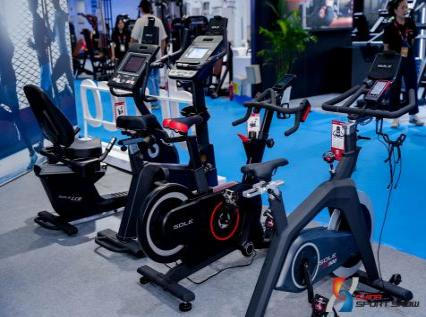
Technology has revolutionized the fitness industry and has made personal training sessions more effective, efficient, and accessible. Technology has enabled certified personal trainers to work with a broader variety of clients and to customize programs to meet an individual’s health and fitness goals. Technology can also provide personalized feedback, monitor progress during each session, and adjust training programs accordingly. Conversely, after a night of restful sleep, the app could recommend a more challenging HIIT workout or strength training session. This dynamic adjustment, powered by machine learning algorithms, optimizes your fitness plan for peak performance while minimizing the risk of overtraining and injury.
Embracing Healing: Discovering Alternative Wellness Practices

For example, an AI-powered fitness app could detect a sudden increase in training volume coupled with decreased sleep quality and alert the user to a heightened risk of muscle strain, suggesting reduced intensity or rest days. This predictive capability empowers individuals to make informed decisions, minimizing downtime and maximizing long-term progress. Furthermore, AI can personalize recovery strategies beyond simple rest recommendations. Machine learning models can predict the user’s response to different training stimuli, allowing for continuous optimization of the fitness plan. Furthermore, the integration of health data, including medical history, lab results, and wearable sensor data, allows for a more holistic and preventative approach to fitness.
What’s Next for AI Wearables?
The data that support the findings of this study are openly available upon request from the corresponding author. After a knee injury, Mark worked with a trainer to develop a low-impact program focusing on strength and flexibility. Mix cardio, strength, and flexibility exercises to avoid plateaus and keep things interesting. Smart glasses like the Ray-Ban Meta and the Bose Frames sunglasses don’t just protect your eyes but also provide a rich audio experience. You can enjoy your music while staying alert to your surroundings, making them ideal for safety-conscious outdoor enthusiasts. Whether at home, at the office, or while traveling, the flexibility offered by online platforms ensures that fitness can always be a priority.
This level of personalization optimizes performance, enhances recovery, and promotes long-term health. The integration of wearable technology and activity tracking further refines the personalization of AI-driven nutrition plans. While “digital humans” may provide a potential solution to facilitate knowledge transfer, motivation, and adherence, this study was designed only to evaluate the content and appropriateness of the exercise recommendations. As indicated in the methodology section, the decision to conduct this analysis without significant interaction with the GPT model was deliberate and guided by several considerations. Primarily, the study sought to assess ChatGPT’s ability to tailor training programs to specific patient requirements, simulating the experience of a typical untrained layperson lacking sports science knowledge.